


What is a Silver Mutual Fund? Meaning, Benefits & How it works
Written by Akshay Kumar Rao
25 Jan 2026 • 7 read


A silver mutual fund is a silver ETF fund of fund that invests primarily in a Silver ETF, giving you exposure to domestic silver prices without buying or storing the metal yourself. You can invest through the mutual fund route without a Demat account, and also through SIPs mode. Since the underlying silver ETF holds physical silver and permitted silver-related instruments, the fund’s performance moves broadly with silver prices, subject to tracking error.
Silver mutual funds are investment products that allow you to gain exposure to the precious metal without physically owning it. Silver ETF Fund of Fund track the domestic price of silver by investing in ‘silver ETFs’ or exchange traded funds. Silver ETFs, in turn, store the units of physical silver in a secured vault.
So, are you thinking about investing in silver mutual funds? Then start by reading this article to understand the meaning of silver ETF mutual funds, how they work, and what are their benefits and make an informed decision.
Table of Content

What is a Silver Mutual Fund?: Understanding Silver ETF Fund of Funds
A silver ETF Fund of Funds is a type of open-ended fund of fund mutual fund scheme that invests your money primarily into a Silver Exchange Traded Fund (ETF). In turn, this silver ETF holds physical silver.
To clarify, a silver ETF is a fund that tracks the physical price of silver in the domestic market, subject to a tracking error. So, simply put, a silver ETF Fund of Funds is a fund that buys units of another silver ETF.
By investing in a silver ETF FoF, you get:
Exposure to silver without storing/buying silver yourself
Invest in silver without having a Demat account and trading account
How do Silver ETF FoFs work?
We already know that Silver ETF FoFs invest in silver ETFs and the price of silver ETFs is connected to the actual price of silver. But how does this set-up work? Here’s how:
You Invest into the Silver ETF FoF: You log into your mutual fund app or the web portal and choose a silver ETF FoF for investment. You select the silver mutual fund scheme and start investing through SIPs or the lump-sum route.
The Silver Fund Invests in Silver ETFs: Next, the fund uses the pooled money from all it’s investors to buy units of a silver exchange traded fund (ETF). Silver ETFs invest primarily in silver bars of 99.9% purity and may have some exposure to Exchange-Traded Commodity Derivatives (ETCDs) that have silver as the underlying commodity.
Price of Silver ETF Influences Silver Mutual Fund Prices: Now, the NAV of your silver ETF Fund of Funds will depend on the silver ETF returns and performance. When silver prices change in the market, the price of silver ETFs also changes. So, the NAV of a silver ETF FoF also fluctuated based on changes in silver’s domestic price. In other words, silver ETF returns influence the returns from your silver ETF Fund of Funds investment (subject to the silver ETF and silver ETF FoF expenses).
Benefits of Silver ETF FoFs
The key benefits of investing in silver ETF FoFs are outlined below:
SIP-friendly Investment: You can start investing in Silver ETF Fund of Funds with simple monthly SIPs starting for eg. as little as Rs. 500. The minimum investment needed to buy the physical metal would be a lot higher.
No Demat Account Needed: You can buy silver ETFs only if you have a Demat account to hold them in. This is not the case for silver ETF FoFs. You can invest in them through the fund house or distributor, just like any other mutual fund.
May Help with Diversification and Risk Management: Diversifying your investment with silver exposure may help you reduce your portfolio risks. Typically, silver has very low correlation with equities. So, adding it to your portfolio may help spread risks and reduce volatility impact.
Tata Silver ETF Fund of Fund: An Example
Now that we’ve covered the meaning and benefits of silver ETF funds, let’s take a real example of the Tata Silver ETF Fund of Fund to understand them better:
- Scheme Type: An open-ended fund of fund scheme investing in the Tata Silver Exchange Traded Fund.
- Investment Objective: The investment objective of this scheme is to provide returns that are in line with the returns provided by the Tata Silver Exchange Traded Fund. However, there is no assurance or guarantee that this objective will be achieved.
- Asset Allocation: As per the Scheme Information Document, asset allocation of the scheme in normal circumstances will be:
- Units of Tata Silver Exchange Traded Fund (95%-100%)
- Debt and Money Market Instruments Including Units of Other Mutual Funds (0%-5%)
| Exit Load | Benchmark | Scheme Riskometer | Benchmark Riskometer |
| 0.5%: If redeemed/switched out/STP/SWP on or before 7 days from the date of allotment | Domestic price of silver | Very high risk | Very high risk |
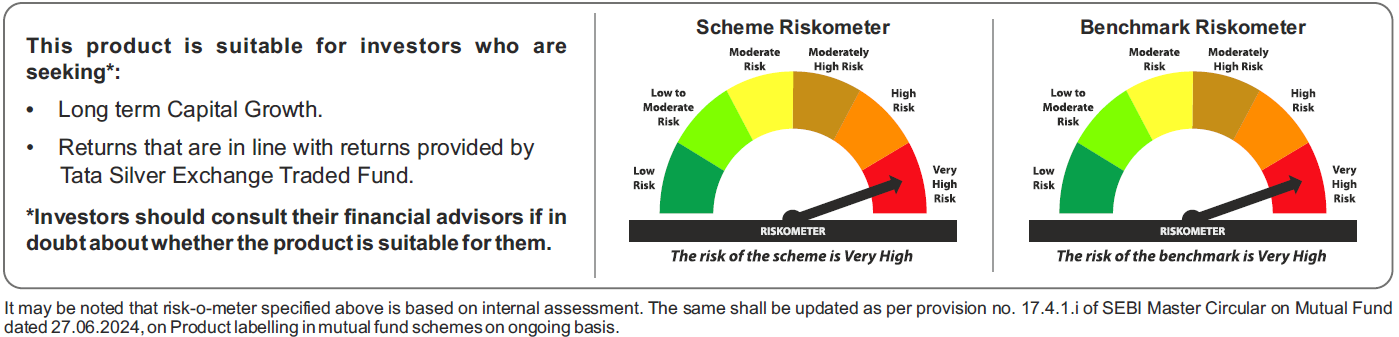
Disclaimer: Investors are requested to note that they will be bearing the recurring expenses of the Tata Silver ETF Fund of Fund , in addition to the expenses of the Tata Silver Exchange Traded Fund in which the fund of funds scheme makes investments.
Factors to Consider Before Investing in Silver ETF Fund of Funds
If you’re thinking of investing in silver ETF FoFs, here are some factors you may consider before taking the decision:
Expense Ratios: The investment cost of silver ETF FoFs include two things: the FoF’s expense ratio and the underlying ETF’s expense ratio. So, you will have to bear both. Try to look for a silver ETF FoF with a low expense ratio to potentially boost your returns in the long-run.
Check the Tracking Error: Review how closely the underlying silver ETF price tracks the price of silver. A large discrepancy will mean substantial tracking error. Typically, a smaller error is preferred because then you know the performance of the fund is in line with the movements in silver prices.
Review Liquidity: See the liquidity of the silver ETF Fund of Funds. This means checking trading volumes. If there enough buyers and sellers for the fund, it will be easier for you to exit your position.
Understanding Differences Between Silver ETF FoFs and Silver Exchange Traded Funds
In India, there are two ways to invest in silver funds:
Silver ETF FoFs: Mutual fund route
Silver ETFs: Direct route
If you’re confused about which option to choose, the following table on differences will help clarify things:
| Features | Silver ETF FoFs | Silver ETF |
| Demat Account and Trading Account |
|
|
| Expense Ratio |
|
|
| Price and Trading |
|
|
| Minimum Investment |
|
|
To sum up:
If you already have a Demat account and would like to trade during market hours, silver ETF offer a cost-effective option
If you don’t wish to open a Demat account and are more comfortable with mutual funds, silver ETF FoFs may be the better alternative.
Conclusion
With this, we hope the meaning of silver ETF Fund of Funds, how they work, and what are their key benefits is clear. To sum up quickly:
Silver ETF mutual funds are simply silver ETF FoFs that invest primarily in silver ETFs.
Silver ETF prices track the domestic price of silver.
Therefore, silver ETF returns can impact the FoF’s performance.
Silver ETF fund of funds allow you to invest in silver without holding the metal physically and without opening a Demat account. This helps you get exposure to the precious metal for diversification and risk hedging, without the hassles of dealing with storage, safety, and purity concerns.
But before you invest in silver ETF funds, please consider the total investment cost which include Silver ETF’s fees as well. Also consider your time horizon, goals, and risk appetite (because silver ETF FoFs are very high risk) to see if this is the right pick for your portfolio.
FAQs
1. What is a silver mutual fund in 2026?
A silver mutual fund is a silver ETF fund of fund (FoF). It is an open-ended mutual fund that invests primarily in units of a silver ETF, which in turn tracks the domestic price of physical silver. This gives you exposure to silver through the mutual fund route without having to buy or store physical silver yourself.
2. How is a silver fund different from a silver ETF?
The main difference is that silver ETF FoFs is a type of mutual fund schemes that invest in silver ETFs. Silver ETFs, holds physical silver or permitted silver-related instruments and its units are listed and trade on a stock exchange. Silver ETF FoFs help you invest indirectly into silver ETF through the mutual fund route, while silver ETFs help you directly invest through a Demat account. However, FoF investors have to bear both the expenses of the scheme in addition to the expenses of the underlying ETF.
3. Do I need a Demat account for a silver fund?
No. You can invest in a silver mutual fund without a Demat account through an AMC or mutual fund investment platform - just like any other mutual fund scheme.
4. How is a silver mutual fund taxed?
As per the current tax laws, silver ETF FoF units sold after 24 months are taxed at 12.5% without indexation. However, gains from units held for 24 months or less are taxed at your income tax slab rate.
5. What drives silver prices differently from gold?
Silver is both a precious metal and an industrial commodity. Its price is influenced by investment demand as well as industrial use, including demand from sectors such as electronics and solar energy. Gold, in comparison, is driven more heavily by investment demand, central-bank activity. This industrial component can make silver prices behave differently from gold. Factors such as global demand and supply, exchange rates, interest rates, and inflation are some of the key drivers of silver prices.
6. How much silver should your portfolio hold?
As such, there is no definite prescribed percentage that every investor should allocate to silver. The allocation should depend on your existing portfolio, goals, investment horizon and risk appetite. Silver prices can be volatile, so rather than choosing an allocation based on the silver ETF price today, consider how much commodity exposure you already have and how silver fits into your overall asset allocation.
Disclaimer:
The views mentioned above are for information & educational purposes only and do not construe to be any investment, legal, or taxation advice. Investors must do their own research before investing. The views expressed in this article are personal in nature and in is no way trying to predict the markets or to time them. Any action taken by you on the basis of the information contained herein is your responsibility alone, and Tata Asset Management Pvt. Ltd. will not be liable in any manner for the consequences of such action taken by you. Please consult your Mutual Fund Distributor before investing. The views expressed in this article may not reflect in the scheme portfolios of Tata Mutual Fund. There are no guaranteed or assured returns under any of the schemes of Tata Mutual Fund.
*Mutual Fund Investments are subject to market risks, please read all scheme related documents carefully.
Author Bio

Akshay Kumar Rao

Loading Form...
Loading Similar Blogs...