


₹5 Lakh Lumpsum in Equity Mutual Funds: 10 and 15 Year Scenarios
Written by Ashish Suryakant Pawar
28 Oct 2026 • 5 minutes read
Lumpsum is one of the two common modes of investing in mutual funds, the other being a Systematic Investment Plan (SIP). Under the lumpsum mode, an investor invests the entire amount in a single transaction at the prevailing NAV.
If you had made a ₹5,00,000 lumpsum investment in an equity mutual fund scheme tracking the Nifty 50 as benchmark, your investment could have potentially grown to approximately ₹14 lakhs* in 10 years or ₹23 lakhs* in 15 years assuming an annual return of 11%.
*These figures are only illustrative estimates.
As per SEBI Circular, Rationalisation and Categorisation of Mutual Fund Schemes, dated February 26, 2026, the category of equity mutual funds include 11 different types, such as multi cap, large cap, mid cap, small cap, value, contra funds, and more.
These schemes have different investment objectives and portfolio requirements, but they predominantly invest in equity and equity-related instruments. Consequently, their returns are linked to stock market performance and may fluctuate with changing market conditions.
Investing ₹5 lakh in an equity mutual fund through a “lumpsum transaction” exposes the full amount to market movements from the outset. The potential outcome depends on the scheme’s performance, the investment period, and market conditions.
Want to do a scenario analysis? This article simulates how a ₹5 lakh lumpsum investment could potentially grow over 10 and 15 years, assuming annual returns of 8%, 9%, 10%, and 11%.
But firstly, let’s understand what a lumpsum investment is.
Table of Content

What is a Lumpsum Investment?
A “lumpsum” is a method of investing in which an investor puts an upfront capital into a mutual fund scheme in a single transaction (instead of investing smaller amounts every month).
For example,
- Suppose an investor has ₹1 lakh from a bonus or accumulated savings.
- They invest the entire ₹1 lakh in a mutual fund scheme.
- The number of mutual fund units purchased depends on the scheme's Net Asset Value (NAV) on the transaction date.
- The full investment is then subject to market movements from the time the units are allotted.
The Suitability
A lumpsum investment may suit investors who have surplus money available for investment and can identify a suitable time to enter the market. For example, an investor may choose to invest when market prices have fallen (expecting them to recover over time).
However, predicting market movements is tough even for experienced investors, and the prevailing prices may even fall further after the investment.
How to Calculate the Future Value (FV) of a Lumpsum Investment?
The future value of a lumpsum investment estimates how much a one-time investment could be worth after a specified period, assuming a particular annual rate of return. The calculation uses the “compound interest formula”, which accounts for returns earned on the initial investment and the returns accumulated over time.
The FV formula is:
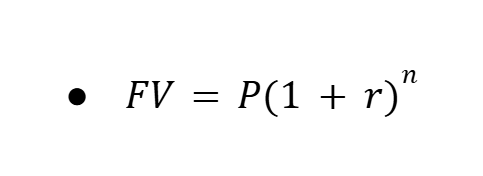
Where:
- FV: Future value of the investment
- P: Initial investment amount
- r: Expected annual rate of return (expressed as a decimal)
- n: Investment period in years
What Could You Have Potentially Accumulated by Investing ₹5,00,000 Lumpsum for 10 Years?
Suppose you had invested a lumpsum of ₹5,00,000 in a equity mutual fund schemes tracking the Nifty 50 benchmark for 10 years. Depending on the assumed annual rate of return, the investment could have potentially grown to the following amounts:
Assumed Annual Rate of Return | Total Investment | Approx Accumulated Amount |
8% | ₹5,00,000 | ₹10 lakhs |
9% | ₹5,00,000 | ₹11 lakhs |
10% | ₹5,00,000 | ₹12 lakhs |
11% | ₹5,00,000 | ₹14 lakhs |
Keep building your financial knowledge, just like your corpus! Read more educational blogs (written by industry experts) on mutual fund categories, SIPs, long-term wealth creation, investment calculations, and similar concepts. |
What Could You Have Potentially Accumulated by Investing ₹5,00,000 Lumpsum for 15 Years?
Suppose you had invested a lumpsum of ₹5,00,000 in an equity mutual fund scheme tracking the Nifty 50 benchmark for 15 years. Depending on the assumed annual rate of return, the investment could have potentially grown to the following amounts:
Assumed Annual Rate of Return | Total Investment | Approx Accumulated Amount |
8% | ₹5,00,000 | ₹15 lakhs |
9% | ₹5,00,000 | ₹18 lakhs |
10% | ₹5,00,000 | ₹20 lakhs |
11% | ₹5,00,000 | ₹23 lakhs |
These figures are only illustrative estimates.
Disclaimer: The performance data presented herein are not verified by Past Risk and
Return Verification Agency (PaRRVA) or any other agency recognized by
SEBI for this purpose. The performance data presented herein may not be
comparable to the performance data of any other IA/ RA. Computation of the
performance may vary across the industry. Users are requested to apply
their due diligence before making investment decisions on the basis of the
given past performance data. Past performance is no guarantee of future
results. Investment in securities is subject to market risk. Registration with
SEBI or enlistment with IAASB or RAASB (as the case may be) is not a
guarantee or assurance of future returns.
Conclusion
So now you know what a lumpsum investment is and how much you can potentially accumulate by making a ₹5 lakh lumpsum investment in an equity mutual fund scheme.
If we were to revise, a lumpsum is a method of investing in which the entire amount is invested in a single transaction rather than through monthly instalments. The future value of a lumpsum investment can be estimated using the compound interest formula.
As simulated above, a ₹5 lakh lumpsum investment could potentially grow to approximately ₹14 lakh* in 10 years and ₹23 lakh* in 15 years, assuming an annual return of 11%.
*These figures are only illustrative estimates.
For more information, you can visit www.tatamutualfund.com/deshkarenivesh. The Investor Service Centre of Tata Asset Management Pvt. Ltd. is located at Mulla House, Ground Floor, 51, M.G. Road, Near Flora Fountain, Mumbai – 400 001, Maharashtra. The office hours are Monday to Friday, 9:00 AM to 5:30 PM. For assistance, you can also call (022) 6282 7777 from Monday to Saturday, 9:00 AM to 5:30 PM, or email service@tataamc.com
₹5,00,000 Lumpsum Investment FAQs
1. When is the right time to make a lumpsum investment in an equity mutual fund?
Predicting the “right time” or timing the market is difficult even for experienced investors. Market prices may fall further even after an investor makes a lumpsum investment during a downturn.
Instead, investors may consider their financial goals, investment horizon, and risk appetite before investing. They may also assess whether they can remain invested through market downturns without needing the money for immediate expenses.
2. How do I calculate the potential returns on a lumpsum investment?
The future value of a lumpsum investment can be estimated using the compound interest formula: FV=P(1+r)n, where, P is the initial investment, r is the assumed annual return (expressed as a decimal), and n is the investment period in years.
3. Can I withdraw my lumpsum investment at any time?
Open-ended equity mutual fund schemes generally allow investors to redeem their units on any business day during regular market hours, subject to the scheme's terms and conditions. However, exit loads may apply to withdrawals requested within a specified period.
Disclaimer:
An Investor Education and Awareness Initiative by Tata Mutual Fund.
To know more about KYC documentation requirements and procedure for change of address, phone number, bank details, etc., please visit: https://www.tatamutualfund.com/deshkarenivesh
Please deal only with registered Mutual Funds, details of which can be verified on the SEBI website under ‘Intermediaries / Market infrastructure institutions.’
All complaints regarding Tata Mutual Fund may be directed to service@tataamc.com and/or https://scores.sebi.gov.in/ (SEBI SCORES portal) and/or https://smartodr.in/login
Nomination is advisable for all folios opened by an individual, especially with sole holding, as it facilitates an easy transmission process.
This communication is a part of the investor education and awareness initiative of Tata Mutual Fund.
*Mutual Fund Investments are subject to market risks, please read all scheme related documents carefully.
Author Bio

Ashish Suryakant Pawar

₹2,000 a Month SIP: What It Could Build Over 15, 20, and 25 Years
Written by Ashish Suryakant Pawar
28 Oct 2026 • 6 minutes read

Get closer to your financial goals
Start InvestingLoading Form...
Loading Similar Blogs...