


How to invest in Silver ETFs in India: Step-by-Step Guide?
Written by Akshay Kumar Rao
24 Jan 2026 • 7 minutes read


Under the SEBI Circular - Rationalisation and Categorisation of Mutual Fund Schemes, dated February 26, 2026, Silver Exchange Traded Funds are classified in the "Other Schemes" category. They invest at least 95% of their total assets in physical silver and other permitted silver-related instruments.
To invest in Silver ETFs, you may first need to open a trading and Demat account with a registered broker. Once the account is active, search for the desired Silver ETF on the stock exchange, place a buy order for the required number of units, and complete the transaction. The ETF units are then credited to the Demat account.
Earlier, diversifying your portfolio with previous metals like silver meant buying physical silver coins or bars. But today, this has changed. Now you can easily invest in silver through ETFs or exchange traded funds.
Silver ETFs allow you to invest in the precious metal without worrying about storage, purity, and insurance concerns. Plus, they have the added benefit of easy liquidity.
But how do you go about buying silver ETFs? What is the process of investing in silver ETFs in India? Well, it’s actually pretty simple. Keep reading this article to find out how to invest in silver ETFs in India.
Table of Content

What are Silver ETFs?
Silver ETFs are exchange-traded funds that invest in at least 95% of their net assets into silver and silver-related instruments. As per SEBI guidelines in India, silver ETFs can invest in:
Physical silver of 99.9% purity
Exchange-Traded Commodity Derivatives (ETCDs) that have silver as the underlying commodity (subject to limits and rules set by SEBI)
The objective of a silver ETF is to generate returns that are in line with the performance of physical silver domestic prices, subject to tracking errors. This means that silver ETF prices change based on how the price of silver fluctuates in the domestic market and the same is reflected in the daily NAV of the ETF.
How do Silver ETFs work?
Before we get to how you can start investing in silver ETFs, let’s understand how a silver ETF works:
Silver ETFs pool funds from different investors and fund managers use it to buy physical silver
The physical silver is stored in secured vaults so you don’t have to worry about asset safety and storage
Silver ETF prices track the price of silver in the domestic market. This means that the NAV of the silver ETF moves in line with the market price of silver
You can buy and sell silver ETF units on the stock exchange using your Demat and trading account
Step-by-Step Guide: How to invest in Silver ETFs in India
If you’re thinking of investing in silver ETFs, here’s a quick on how to buy silver ETFs in India:
Step 1: Open a Demat and Trading Account
Since ETFs trade on stock exchanges, you will need an active Demat account to store the ETF units and a trading account to buy and sell the silver ETF units. This means you will need to open a Demat and trading account with a SEBI-registered broker to invest in silver ETFs (if you don’t already have them).
The good news is that most brokerage firms offer an easy online account opening option with a quick e-KYC for verification. Once your KYC is verified, you will be able to start investing in silver ETFs.
Step 2: Research and Choose a Suitable Silver ETF
The next step in buying silver ETFs is researching which one you wish to pick. There are a number of silver ETFs in the market and choosing among them means comparing more than just silver ETF returns.
You can compare different silver ETFs based on factors like:
Expense ratio: This is the annual fee charged by the fund, which can impact your overall silver ETF returns over time.
Liquidity: Higher liquidity means you can buy or sell the silver ETF easily without large price differences.
Tracking accuracy: This shows how closely the silver ETF follows actual silver prices. That’s why, it may be a key indicator of the silver ETF performance.
Step 3: Place a Buy Order
Once you’ve selected silver ETFs for investment, you can log in to your trading app to place an order. Here’s how you can go about it:
Search for the silver ETF by name or symbol
Choose the number of units you wish to purchase or the amount you wish to invest
Place an order
You can also decide whether you want to buy the silver ETF at the prevailing market price or set a limit price when placing the order.
Step 4: Monitor the Silver ETF’s Performance
Once the silver ETFs are credited to your Demat account, you can monitor their performance by logging into your trading account. In order words, you can check how silver ETF returns fluctuate based on the changing price of silver in the domestic market.
Step 5: Sell When Needed
When you choose to exit, place a sell order for your silver ETF investment during market hours. Steps for the same are listed below:
Open your trading app
Choose the silver ETF you wish to sell from your portfolio
Enter the number of units you want to sell, the price, and order type
Once sold, the proceeds will be credited to your trading account.
Advantages of investing in Silver ETFs
Some key advantages of investing in silver ETFs include:
No Storage Risks: Unlike physical silver, silver ETFs are held by you in an electronic format. This means you don’t have to think about storage costs or theft risks.
Liquidity: Since silver ETFs trade on recognised stock exchanges in India where you can buy or sell them with ease during market hours, just like stocks.
Portfolio diversification: Adding silver ETFs or silver ETF fund of funds to your portfolio may help diversify it since silver belongs to a different asset class and often behaves differently from equities and debt instruments.
Risks and Limitations of Silver ETF Investments
Every market-linked investment carries risk and silver ETFs are no different. Here’s a list of key considerations you should understand before buying silver ETFs:
Price volatility: Silver ETF prices may swing sharply based on industrial demand, global supply, and other factors. In other words, silver ETF returns may be volatile.
Tracking errors: Tracking errors which can lead to a difference between the silver ETF NAV and prevailing spot prices. This means your investment may not move exactly in line with domestic silver prices.
Who may choose to invest in Silver ETFs?
Silver ETFs may be suitable for different types of investors. You may consider investing in Silver ETFs, if you’re looking for:
Portfolio diversification
Exposure to precious metals
That said, you should always consider things like your investment goals, risk tolerance, and investment horizon thoroughly before investing in silver ETFs.
Alternative to Direct Silver ETF Investments: The Mutual Fund Route
A silver ETF fund of fund offers an alternative if you don’t have a Demat account. In this case, instead of buying a silver ETF yourself, you invest in a mutual fund scheme that, in turn, invests in an underlying silver ETF. This route works well if you prefer getting silver exposure through MFs.
Here’s what you need to know about investing in silver ETF funds through the mutual fund route:
You invest in a mutual fund scheme that holds units of a silver ETF
The fund manager manages ETF purchases and redemptions on your behalf
Your investment value moves in line with the underlying silver ETF
You can invest through lump sum or systematic investment options
Units are held in mutual fund form, not in a demat account
But you should note that investing through silver ETF fund of funds may involve additional costs compared to direct silver ETF investments.
Conclusion
Through silver ETF investments, you can invest in the precious metal without worrying about issues like storage or purity. A silver ETF also gives you the flexibility to buy and sell on the exchange while adding diversification to your portfolio. You can invest either directly through your Demat account or choose a more indirect route through silver ETF fund of funds.
But before you invest in silver ETFs in any way, it is important that you understand how silver ETF prices moves, the costs involved, and whether silver fits your financial goals and comfort with market risk.
For more information, you can visit www.tatamutualfund.com/deshkarenivesh . The Investor Service Centre of Tata Asset Management Pvt. Ltd. is located at Mulla House, Ground Floor, 51, M.G. Road, Near Flora Fountain, Mumbai - 400 001, Maharashtra. The office hours are Monday to Friday, 9:00 AM to 5:30 PM. For assistance, you can also call (022) 6282 7777 from Monday to Saturday, 9:00 AM to 5:30 PM, or email service@tataamc.com .
FAQs
1. How to invest in silver in India in 2026?
Investors can gain silver exposure in India through physical silver, Silver ETFs, or a Silver ETF Fund of Funds. Note that a Silver ETF offers “exchange-traded” exposure (similar to shares) to domestic silver prices without physical storage.
In contrast, a Fund of Funds (FoF) provides a mutual fund route, while physical silver involves direct ownership. The potentially “right” choice depends on your investment preferences and risk appetite.
2. How to buy Silver ETF in India?
To buy a Silver ETF, you may open a Demat and trading account with a SEBI-registered broker. Next, select the Silver ETF scheme available on the trading platform, enter the number of units, and place a market or limit order. Once executed, the units are credited to your Demat account.
3. How to buy silver shares in India?
Silver shares are not available in India, as it is a “commodity”. Investors seeking exposure to the domestic price of silver may potentially consider Silver ETFs or Silver FoFs.
Alternatively, investors may research and invest in silver-related companies, which may provide an “indirect exposure” to the domestic silver price.
4. How to invest in Tata Silver ETF?
The Tata Silver ETF is an open-ended exchange-traded fund replicating/tracking the domestic price of Silver. The investment objective of the fund is to generate returns that are in line with the performance of physical silver in domestic prices, subject to tracking error. However, there is no assurance or guarantee that the investment objective of the scheme will be achieved.
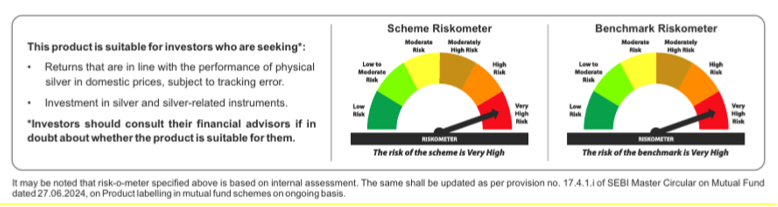
Disclaimer: It may be noted that the risk-o-meter specified above is based on an internal assessment. The same shall be updated as per provision no. 6.16.1.j of SEBI Master Circular on Mutual Fund dated 20.03.2026, on Product labelling in mutual fund schemes on an ongoing basis.
To invest in a Tata Silver ETF, an investor generally needs a Demat and trading account. Next, register on the Tata Mutual Fund™ platform by completing your KYC (Know Your Customer) and search for the Tata Silver ETF. Next, the desired number of units can be purchased by placing a market or limit order.
5. How to buy silver in the share market?
Since silver is a commodity, investors cannot buy a direct “silver share”. A potential investment route could be purchasing the units of a Silver ETF, which tracks the domestic silver prices (subject to tracking error).
After opening a Demat and trading account, investors can purchase ETF units through a stock exchange, similar to buying shares of a listed company.
Disclaimer:
The views mentioned above are for information & educational purposes only and do not construe to be any investment, legal, or taxation advice. Investors must do their own research before investing. The views expressed in this article are personal in nature and in is no way trying to predict the markets or to time them. Any action taken by you on the basis of the information contained herein is your responsibility alone, and Tata Asset Management Pvt. Ltd. will not be liable in any manner for the consequences of such action taken by you. Please consult your Mutual Fund Distributor before investing. The views expressed in this article may not reflect in the scheme portfolios of Tata Mutual Fund. There are no guaranteed or assured returns under any of the schemes of Tata Mutual Fund.
*Mutual Fund Investments are subject to market risks, please read all scheme related documents carefully.
Author Bio

Akshay Kumar Rao

Loading Form...
Loading Similar Blogs...