


Building a Robust Portfolio: The Role of Mid-Cap Funds in Diversification
Written by Akshay Kumar Rao
31 Dec 2025 • 7 minutes read


We have all hear about the importance of diversification in investing. It simply means spreading investments across different sectors and assets to help manage risk and potential returns. And when it comes to diversification in equity MFs, mid-cap funds can be one of the way to approach.
Mid cap mutual funds invest in companies that have moved beyond the early stages of growth but still have room to expand. Unlike large-caps that invest in well-established players (generally with potentially little room to growth) and small-caps that have high volatility, mid-caps focus on potentially balancing growth and returns, while spreading risk. In this article, we explore how you can build a robust portfolio with a mix of mid-cap funds that add diversification benefits.
Table of Content

What are Mid-Cap Mutual Funds?
A mid cap mutual fund is an equity mutual fund scheme that invests in mid-sized companies that are ranked between 101st to 250th in terms of market capitalisation. According to SEBI’s regulations, mid-cap mutual funds have to invest at least 65% of their assets into mid-cap stocks.
Mid-cap companies are typically established businesses that are still expanding their operations and market presence. As a result, mid cap mutual funds may offer higher growth potential than large-cap funds, but they can also be more sensitive to market cycles. Their behaviour often reflects a balance between growth and, which can support portfolio diversification.
Types of mid-cap funds investors can consider:
Actively managed mid-cap funds, where fund managers select stocks based on research and market conditions
Passively managed mid-cap index funds, which aim to replicate the performance of a mid-cap benchmark like the Nifty Midcap 150 index
Large and mid-cap funds, which spread investments across both market capitalisations for balanced equity exposure
Role of Mid-Cap Funds in Portfolio Diversification
Mid cap funds add a unique layer of diversification because they behave differently from large-cap and small-cap categories. While investing in small cap funds may offer potential higher return (given how these companies are still in nascent stages and have growth potential), this growth possibility if linked to higher volatility. Mid-caps, on the other hand, help investors manage the volatility with investment in more established companies compared to small-caps.
Here's how they contribute to creating a diversified portfolio:
Sector diversification:
Mid-cap mutual funds invest across sectors such as power, construction, financial services, IT and pharma, helping spread exposure and reduce dependence on any single industry.Company size balance:
Mid-cap investment funds sit between large-caps and small-caps. While large-cap funds offer relative stability compared to small-caps and mid-caps, small-caps offer more growth potential against high volatility. Mid-caps help balance the two, supporting diversification within the equity portion of a portfolio.Risk mitigation:
By investing in multiple companies across sectors, mid-cap funds help reduce the impact of any single stock or sector underperforming.Access to growing businesses:
A mid-cap fund provides exposure to companies in their expansion phase, which may offer higher growth potential than established large-cap firms but with higher volatility.
Exploring Tata Midcap Mutual Fund Schemes
If you’re thinking of adding mid-cap MFs to your portfolio for diversification, you can consider some of the mid-cap fund schemes offered by Tata AMC. You can choose to start investing via SIPs or lump-sum contributions. Moreover, all schemes offer growth and dividend plan options to help you meet your financial and income goals:
1. Tata Midcap Fund: An Actively Managed Mid-Cap Fund Option
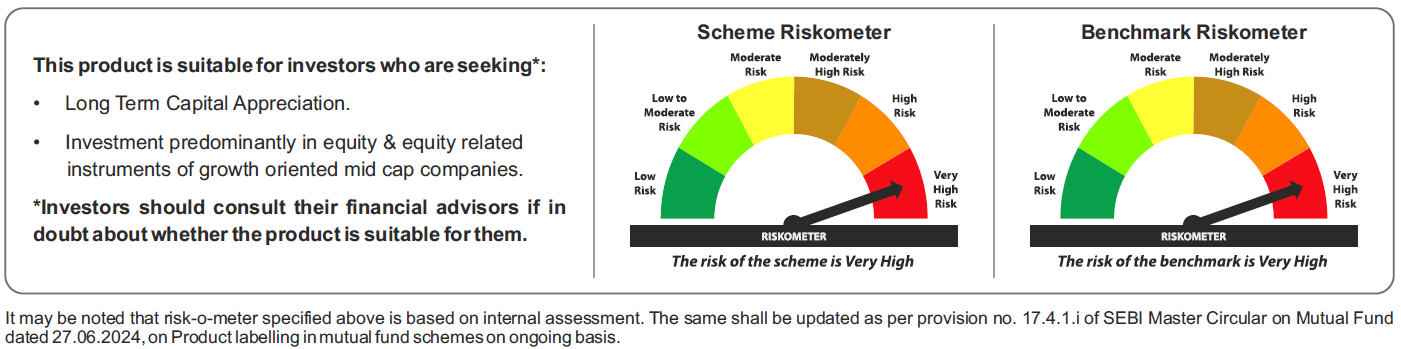
| Exit Load | Benchmark | Scheme Riskometer | Benchmark Riskometer |
| NIL (0.50% if redeemed on or before 30 days from the date of allotment) | Nifty Midcap 150 TRI | Very High Risk | Very High Risk |
Scheme Type: The Tata Midcap Fund is an open-ended equity scheme predominantly investing in mid-cap stocks.
Investment Objective: The investment objective of the scheme is to provide income distribution and / or medium to long term capital gains. Investment would be focused towards mid cap stocks.
However, it is important to note that there is no assurance or guarantee that the investment objective of the Scheme will be achieved. The returns are not assured or guaranteed.
In other words, the scheme will invest predominantly in mid-cap stocks and endeavour to build and manage a diversified equity portfolio. The emphasis is on investing in well-managed, high-quality companies with above-average growth prospects that are available at reasonable valuations. This includes companies that may offer long-term growth potential.
The scheme is benchmarked against the Nifty Midcap 150 TRI, which represents the performance of mid-cap companies across sectors and helps investors compare the fund’s performance against the broader mid-cap segment of the market.
2. Tata Nifty Midcap 150 Index Fund: An Index Fund Option
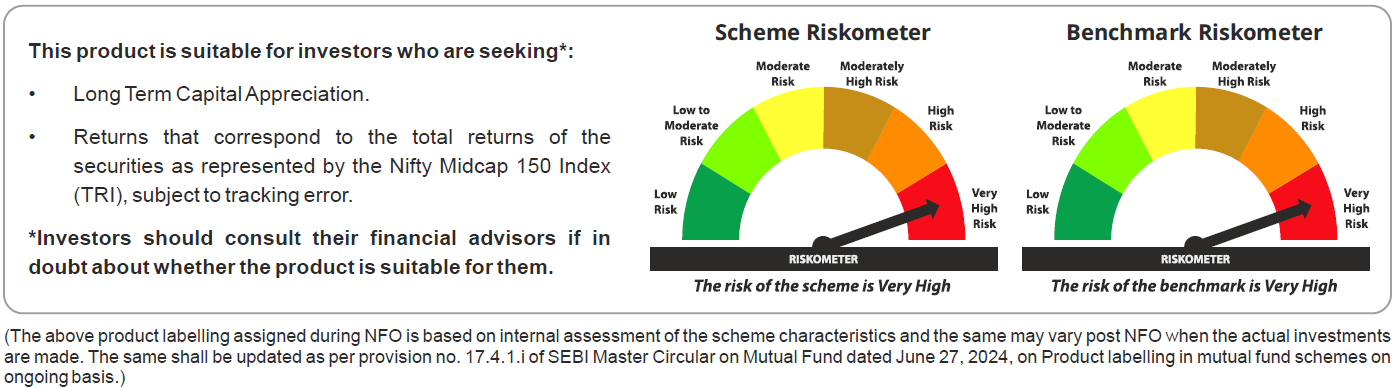
| Exit Load | Benchmark | Scheme Riskometer | Benchmark Riskometer |
| Nifty Midcap 150 TRI | Very High Risk | Very High Risk |
Scheme types: An open ended-fund replicating / tracking the Nifty Midcap 150 Index (TRI).
Investment Objective: The investment objective of the scheme is to provide returns, before expenses, that commensurate with the performance of Nifty Midcap 150 Index (TRI), subject to tracking error.
However, there is no assurance or guarantee that the investment objective of the scheme will be achieved. The scheme does not assure or guarantee any returns.
The Tata Nifty Midcap 150 Index Fund seeks to deliver returns that closely correspond to the performance of the Nifty Midcap 150 Index (TRI), subject to tracking error. The index represents 150 mid-cap companies ranked from 101st to 250th by market capitalisation from the Nifty 500 universe.
This mid-cap index fund follows a passive investment approach and aims to replicate the composition of the underlying index by investing in the constituent securities in the same proportion as their weightage. A small portion of the portfolio may be allocated to debt or money market instruments to manage liquidity and operational requirements.
3. Tata Large & Midcap Fund: A Large & Mid-Cap Fund Option
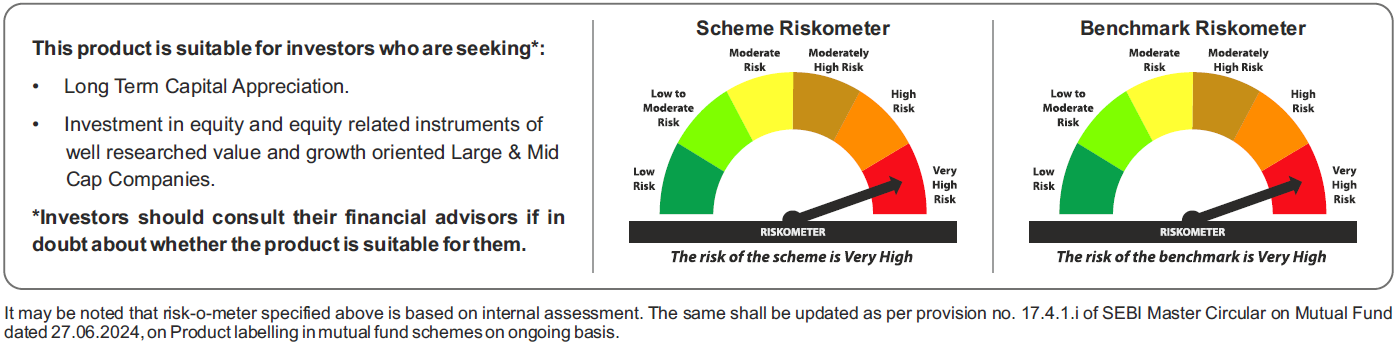
| Exit Load | Benchmark | Scheme Riskometer | Benchmark Riskometer |
| Nifty Large Mid Cap 250 TRI | Very High Risk | Very High Risk |
Scheme Type: The Tata Large & Mid Cap Fund is an open-ended equity scheme investing in both large cap and mid cap stocks.
Investment Objective: To provide income distribution and/or medium to long term capital gains while at all times emphasising the importance of capital appreciation.
However, there is no assurance or guarantee that the investment objective of the Scheme will be achieved. The scheme does not assure or guarantee any returns.
The Tata Large & Mid Cap Fund combines the growth potential of mid-cap stocks with the relative stability of large-cap options. Since this fund combines large and mid-cap stocks, it may offer better diversification to investors looking to avoid pure mid-cap allocations.
Tips to Optimise Your Mid-Cap Fund Investment
Here are a few tips on optimising your mid-cap investment:
Match your investment to your risk appetite: Mid cap funds can fluctuate, so align your investment with your comfort level and financial goals.
Invest for the long term: A longer horizon may help smooth interim volatility and allow growth trends to play out.
Consider SIPs for disciplined investing: A SIP approach in a mid cap mutual fund can help average purchase costs across market cycles.
Use tools for planning: A SIP calculator can help you understand how your contributions may grow under different scenarios.
Monitor and rebalance: Review your mid cap exposure periodically to ensure alignment with your risk tolerance.
Evaluate fund consistency: Check how the fund has behaved in rising and falling markets to assess its approach to risk.
Mid cap mutual funds can play a meaningful role in building a diversified and resilient portfolio. They provide exposure to companies with growth potential while adding diversification across sectors and market cycles.
By combining thoughtful allocation with disciplined investing and periodic portfolio review, mid-cap investment funds can help strengthen diversification and support long-term portfolio construction.
*Mutual Fund Investments are subject to market risks, please read all scheme related documents carefully.
Author Bio

Akshay Kumar Rao

Loading Form...
Loading Similar Blogs...