


Why Gold SIPs are the "Discipline of 2026"?
Written by Akshay Kumar Rao
31 Jan 2026 • 7 minutes read


A gold SIP lets you invest a fixed amount regularly in gold-linked investments instead of putting in a large amount at once. In India, you can invest through a Gold ETF FoF without a Demat account, or regularly buy Gold ETF units through ‘stock SIPs’ if your platform supports the facility. Investing at regular intervals means you buy more units when prices are lower and fewer when prices are higher, helping average your purchase cost over time.
Gold has remained a trusted store of value for investment portfolios, especially when the markets get choppy. This safe haven asset is more than just an inflation hedge. It is also an asset that tends to surge during periods of geopolitical tensions and wars. For instance, gold prices surged during the 1979 Soviet invasion of Afghanistan and the 2022 Russia-Ukraine war.
But how do you invest in gold, especially when the metal has seen sustained rallies in the recent past? Well, one option is gold SIPs. Gold SIPs offer a simple and disciplined way to get exposure to the precious metal with small and regular contributions without being influenced by the market noise.
In this article, we explore why gold SIPs in 2026 as the most disciplined way of taking positions in gold and what are the SIP options you can consider to build your portfolio.
Table of Content

What is Gold SIP?
A gold SIP is a method of investing in gold-linked investment by making a fixed contribution at regular intervals. This means, instead of investing a large sum at once, you invest in gold ETFs, gold ETF fund of fund, and even on a weekly, monthly, or quarterly basis.
So, how does a gold SIP work? Here’s how:
You invest a fixed sum of money into the gold-related asset (Gold ETF Fund of fund/gold Exchange Traded Fund)
Each gold SIP installment buys a certain number of units at the prevailing prices
You buy more units when prices fall and less when prices increase, averaging out the investment cost overtime.
Types of Gold SIPs: Where can you start Gold SIPs?
Most investors associate gold SIPs to investing in Gold ETF fund of fund. However, the same concept is now applicable to a range of gold-based investment products.
So, you can start gold SIPs in the following instruments:
Gold ETF fund of fund
Gold ETF fund of funds are a type of open-ended fund of fund scheme that pools funds from investors to buy gold ETF units. This gold ETF, in turn, invests in high purity physical gold that’s stored in secured vaults with a custodian bank. The Tata Gold ETF Fund of Fund is an example of such a mutual fund.
Since gold ETF prices track the price of gold in the domestic market, gold ETF fund of fund returns are closely linked to the performance of the ETF and changes in gold prices. But here are a few more things to note:
You don’t need a Demat and trading account to invest in gold ETF fund of fund.
Gold ETF fund of fund have a higher expense ratio because you have to bear the management costs of the FoF as well as the ETF fees.
You can buy and sell the fund units at the prevailing NAV-based prices. But redemption price is based on SEBI’s cut-off timings.
Disclaimer: Investors are requested to note that they will be bearing the recurring expenses of the fund of funds scheme, in addition to the expenses of underlying scheme in which the fund of funds scheme makes investments.
Gold Exchange Traded Fund
Gold Exchange Traded Funds are simply investment funds that pool money from investors to invest at least 95% of their assets in gold and gold-related instruments. As per SEBI regulations, gold ETFs can invest in physical gold usually of 99.5% purity and Exchange-Traded Commodity Derivatives (ETCDs) that have gold as the underlying commodity (subject to SEBI limits and rules).
Here’s what you need to know about gold ETFs:
You can start SIPs in gold ETF only if the option is available for your investment platform and the selected fund.
Gold ETFs track the price of physical gold and aim to generate returns in-line with the same, subject to tracking errors.
You need to have a Demat account and trading account to buy gold ETFs.
You can buy and sell units of gold ETFs on stock exchanges during market hours (just like stocks).
Why Gold SIPs are the disciplined way of investing in 2026?
When it comes to investing in precious metals like gold, a long-term vision is often needed. So, if you’re buying gold ETF or gold ETF fund of fund, using the SIP route may be a good option. Here’s why:
Gold SIPs Help Average Out the Investment Costs
As mentioned earlier, one of the key benefits of gold SIP is rupee cost averaging. Here’s how it works:
When the price of gold ETF or gold Fund of fund units rise, you buy less units
When the price of gold ETF or gold Fund of fund units fall, you buy more units
This helps average out the cost of your investment in gold over time.
Avoid Emotional Decision-Making
Many investors try to time dips and highs in gold prices to make their entry and exit. This can lead to emotions like panic and anxiety where you either wait too long to sell or end-up buying in fear.
Investing in gold ETFs and gold Fund of fund through SIPs helps avoid this urge to time the market. Since your SIPs are automated, you’re not attempting to time the exact low in gold prices. Instead, you keep investing a fixed sum at fixed intervals with a disciplined approach.
Small Investments Keep the Precious Metal Accessible
Buying physical gold when prices are at an all-time high may not be possible for most small investors. But investing in gold ETFs and gold ETF fund of funds through SIPs makes things easier.
You can buy gold ETF with SIPs where the minimum contribution depends on the gold ETF price for one unit. Since you are not investing a large sum at once, you can build your gold exposure gradually without feeling overwhelmed.
How to start Gold SIPs?
If you’re wondering about how to get started with gold SIPs, You should note that the process differs a bit based on which investment option you pick.
We’ve discussed the steps for both investing in gold ETFs and gold ETF Fund of Fund below:
How to Invest in Gold ETFs?
Step 1: Open a Demat and trading account with a brokerage firm (if you don’t already have one).
Step 2: Compare gold ETFs based on factors like tracking error, AUM, and liquidity to choose the one you wish to purchase.
Step 3: Platforms that offer gold SIPs for ETFs will have the option displayed as ‘Stock SIP’. Click on it.
Step 4: Decide on whether you want to invest a fixed amount or buy a fixed number of units monthly.
Step 5: Choose your gold SIP frequency (daily/weekly/fortnightly/monthly) and date.
Step 6: Click on ‘Create SIP’ to set-up the auto-pay mandate.
How to Invest in Gold ETF Fund of Fund?
Step 1: Compare gold ETF Fund of Fund returns, expense ratios, AUM, and other factors to choose the right option for you.
Step 2: Open your mutual fund investment app or log into your investment platform and search for the selected gold ETF Fund of Fund scheme.
Step 3: Decide how much and how frequently you wish to invest through your gold SIP.
Step 4: Tick the acknowledgement boxes for KYC verification.
Step 5: Confirm the auto-pay mandate to start the gold SIP.
Understanding Gold SIPs with an Example
Now that you know why gold SIPs shine as the disciplined investment approach of 2026, let’s take an example to understand them better. Let’s say you wish to start gold SIPs in the Tata Gold ETF Fund of Fund, here’s what you would first need to know about this gold ETF fund of fund:
Scheme Type: An open-ended fund of fund scheme investing in Tata Gold Exchange Traded Fund.
Investment Objective: The investment objective of the scheme is to seek to provide returns in line with returns provided by the Tata Gold Exchange Traded Fund. However, there is no assurance or guarantee that this objective will be achieved.
| Exit Load | Benchmark | Scheme Riskometer | Benchmark riskometer |
| 0.50% if redeemed within 7 days from the date of allotment | Domestic Price of Gold | High Risk | High Risk |
So, if you wish to invest in the Tata Gold ETF FoF, you can start investing with a nominal amount. Since there is no maximum SIP contribution cap, you can also tailor your gold SIP to make contributions based on your income on a daily, weekly, quarterly, or monthly basis. Depending on your income preference, you can also choose from direct growth, regular growth, direct IDCW, or growth IDCW plan options.
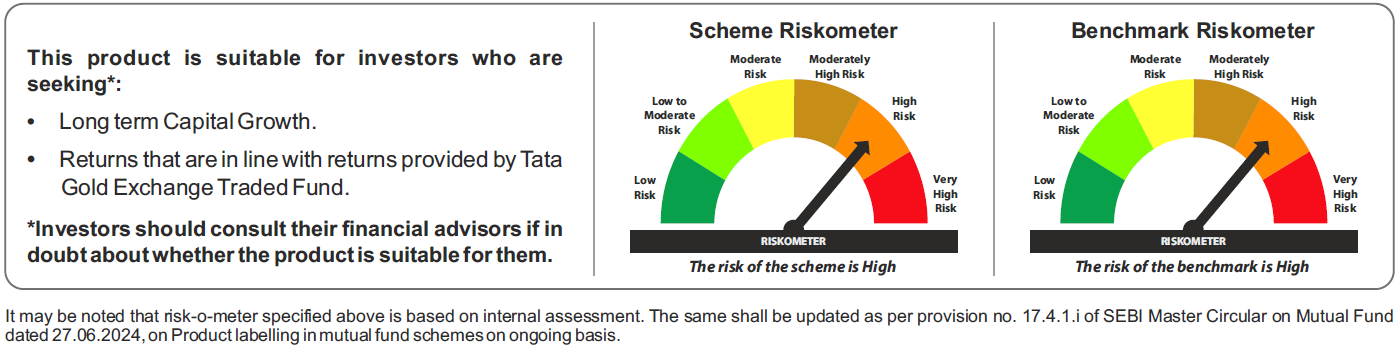
Investors are requested to note that they will be bearing the recurring expenses of the Tata Gold ETF fund of fund scheme, in addition to the expenses of underlying scheme Tata Gold Exchange Traded Fund in which the Tata Gold ETF fund of fund scheme makes investments.
Who should consider Gold SIPs in 2026?
A gold SIP is suitable for a variety of investors, including:
Long-term investors
Salaried investors with regular income for gradual contributions
Investors looking for portfolio diversification
Investors who don’t want to time the market.
Conclusion
We hope you now understand why experts believe gold SIPs are the disciplined way to invest in the precious metal in 2026. They work just like regular SIPs where you make fixed contributions at specific intervals.
Gold SIPs help you:
Average the investment costs over time
Management price volatility
Avoid market timing hassles
Make affordable contributions
If you have a Demat account, you may choose to start gold SIPs in gold ETFs (low-cost option). But, if you don’t have one and prefer the MF route, you can always choose a gold ETF Fund of Fund to get started.
FAQs
1. How do I start a gold SIP in India in 2026?
To start a gold SIP in India you can compare different gold ETF fund of funds to select your preferred scheme. Next, log into your investment account or go to the AMC’s website, select the gold ETF FoF scheme, and enter your gold SIP details (SIP date, amount, and frequency). Set-up the auto-pay mandate and your gold ETF FoF SIP will be in place.
2. Is a gold SIP better than buying gold at festivals?
They serve different purposes. A gold SIP vs gold purchase comparison depends on whether you want gold primarily as an investment or for physical use. A gold SIP lets you invest smaller amounts regularly without worrying about storage or jewellery-making charges. Physical gold may be preferred if you intend to use the gold, but its purchase can involve making charges, storage and purity considerations.
3. What is the minimum amount for a gold SIP?
Minimum SIP amounts can vary across gold ETF FoF schemes from different AMCs. You should check the scheme information document to find out the minimum SIP amount before you choose to invest.
4. Can I do a gold SIP without a Demat account?
Yes. You can invest regularly in a Gold ETF FoF through an SIP without a Demat account. You can start a gold SIP in such funds using your existing mutual fund investment account or directly through the AMC offering the FoF scheme.
5. How is a gold SIP taxed?
Gold SIP taxation depends on the which product you’ve invested in. For gold ETF FoFs units sold before 24 months from the date of investment, the short-term capital gains are added to your annual income and taxed as per your slab rate. For units sold after 24 months, LTCG applies at 12.5%. For gold ETF, the rules are same, but holding period is 12 months instead of 24.
6. How much gold should a portfolio hold?
There is no universally recommended percentage or limit for gold that every portfolio should hold. The allocation depends on your goals, investment horizon, existing investments and risk profile. Since gold can provide diversification because its historical trends may differ from equities and other assets, many asset management experts suggest 5%-15% gold exposure based on your risk appetite. However, please note that this is just a suggested range and gold prices can fluctuate significantly, increasing risk of potential losses.
Disclaimer:
The views mentioned above are for information & educational purposes only and do not construe to be any investment, legal, or taxation advice. Investors must do their own research before investing. The views expressed in this article are personal in nature and in is no way trying to predict the markets or to time them. Any action taken by you on the basis of the information contained herein is your responsibility alone, and Tata Asset Management Pvt. Ltd. will not be liable in any manner for the consequences of such action taken by you. Please consult your Mutual Fund Distributor before investing. The views expressed in this article may not reflect in the scheme portfolios of Tata Mutual Fund. There are no guaranteed or assured returns under any of the schemes of Tata Mutual Fund.
*Mutual Fund Investments are subject to market risks, please read all scheme related documents carefully.
Author Bio

Akshay Kumar Rao

Loading Form...
Loading Similar Blogs...