


Equity Long Short Fund: A Strategy That Doesn’t Wait for the Market to Move
Written by Akshay Kumar Rao
24 Apr 2026 • 7 minutes read
An equity long-short fund invests in stocks expected to rise while also taking short positions, through derivatives, in stocks expected to fall. This gives the strategy a way to seek opportunities in both rising and falling markets, although short positions also add risk if prices move in the opposite direction. Under Tata Mutual Fund’s Titanium SIF, the Titanium Equity Long-Short Fund follows this approach, with at least 80% in equity and equity-related instruments and short exposure through unhedged derivatives capped at 25%.
Markets don’t move in straight lines. Some days they rise. Some days they fall. And often, they just move sideways, testing patience more than anything else. Yet, most traditional investment strategies are built with one assumption: that markets will eventually go up. But what if your investment strategy didn’t have to depend on market direction?
What if it could adapt, instead of wait? That’s where an Equity Long Short Fund comes in.
Table of Content

What is an Equity Long Short Fund?
An Equity Long Short Fund is an investment strategy that aims to generate opportunities from both sides of the market.
Long positions: Investing in companies expected to grow
Short positions: Taking positions in companies expected to underperform
In simple terms,
It aims to benefit when good businesses do well
And also, when weaker businesses struggle
This means the strategy is not dependent only on rising markets. Instead, it focuses on identifying opportunities, regardless of market direction.
A New Layer: What is SIF (Specialized Investment Fund)?
Equity Long Short strategies in India are now being introduced under a new category called Specialized Investment Funds (SIF).
SIFs are designed to offer:
Relatively greater flexibility in portfolio construction
Ability to use derivatives more actively
A regulated structure similar to mutual funds
A more strategy-driven approach to investing
They are typically designed for investors with a higher investment ticket size, looking for differentiated strategies beyond traditional mutual funds.
Why Equity Long Short strategy is relevant today?
Markets today are dynamic and often unpredictable.
Instead of clear bull or bear phases, investors frequently experience:
Volatility
Sharp corrections
Sideways movements
In such an environment, a traditional “only long” approach may not always capture all opportunities.
An Equity Long Short strategy is designed to:
Identify market inefficiencies
Aim to generate returns across market cycles
Convert volatility into potential opportunity
Help manage drawdowns
Strengthen overall portfolio resilience
How does a Long Short strategy work?
Think of it as a two-sided approach:
Long Opportunities
The strategy invests in companies with:
Strong fundamentals
Growth potential
Improving business outlook
Short Opportunities
At the same time, it identifies companies that may:
Be overvalued
Have weak earnings quality
Face business headwinds
Combining Both
By balancing long and short positions, the strategy aims to:
Reduce dependence on overall market direction
Capture opportunities on both side
Manage risk more actively
Introducing Titanium Equity Long Short Fund
The Titanium Equity Long Short Fund is built within the SIF framework and follows a dynamic, multi-layered approach.
It does not follow a fixed path—it adapts.
1. Dynamic Net Equity Allocation
Instead of staying fully invested at all times, the fund may adjust its exposure based on market conditions and asset allocation limits stated in Investment Strategy Information Document (ISID):
In uncertain or falling markets - It may reduce net equity exposure
In stable markets - Exposure may be aligned with valuations
In growth phases - It may increase equity exposure
This dynamic approach aims to manage both risk and opportunity.
2. Multiple Return Drivers
The strategy combines different components to create diversified return sources:
Equity Long Positions - Fundamental, bottom-up stock selection
Short Positions via Derivatives - To capture downside opportunities or hedge risk
Arbitrage Opportunities - To benefit from price differences with relatively lower risk
This combination aims to reduce reliance on a single source of returns
3. Designed for Different Market Phases
The strategy adapts depending on market conditions:
Bull Markets - Higher long exposure, selective shorts
Range-bound Markets - Balanced long-short positioning
Overvalued or volatile markets - Increased hedging and short exposure
This flexibility allows the strategy to respond, not react.
How is it different from Traditional Equity Funds?
Traditional Equity Funds | Equity Long Short Fund |
Primarily benefits in rising markets | Aims to work across market cycles |
Limited hedging tools | Active use of hedging and short positions as permitted by SEBI |
Returns depend on market direction | Multiple return drivers |
Static allocation approach | Dynamic allocation |
Key benefits of Equity Long Short Funds
Designed to capture market inefficiencies
Aims to generate opportunities in both rising and falling markets
Helps in managing downside risk and drawdowns
Flexible across market caps, sectors, and strategies
Potentially more tax-efficient structure compared to certain alternatives
Who may consider this strategy?
This strategy may be suitable for:
Investors looking beyond traditional equity funds
Those seeking diversification in investment approach
Investors comfortable with relatively higher risk
Individuals with a medium to long-term investment horizon
Investors who prefer a strategy that adapts to market conditions
Important Considerations
This strategy involves relatively higher risk, including use of derivatives
Market volatility may impact performance
The strategy may behave differently across market phases
There is no assurance that investment objectives will be achieved
Titanium Equity Long Short Fund Snapshot
Feature | Details |
Investment Strategy Category | Equity Long-Short Fund |
Type of Investment Strategy | An open-ended equity investment strategy investing in listed equity and equity related instruments including limited short exposure in equity through derivative instruments. |
Benchmark | Nifty 500 (TRI) |
Investment objective | To generate medium to long term capital appreciation by investing in equity and equity related instruments including limited short exposure in equity and debt through derivatives. However, there is no assurance that the investment objective of the Investment strategy will be achieved. |
Minimum Application Amount/switch in | The minimum aggregate investment by an investor across all investment strategies offered by Titanium SIF, at the Permanent Account Number (‘PAN’) level, shall not be less than INR 10 lakh. Provided that the requirement of minimum investment amount shall not apply to an accredited investor. |
Exit Load | 1. Redemption/Switch-out on or before expiry of 1 month from the date of allotment: 1% 2. Redemption/Switch-out after expiry of 1 month from the date of allotment-Nil |
Minimum SIP Amount | INR 1,000/- with at least 6 instalment provided the investor has minimum amount of Rs. 10,00,000 in Titanium SIF at PAN level | Min top-up amount is Rs. 1000/- and in multiples of Rs. 1/-. |
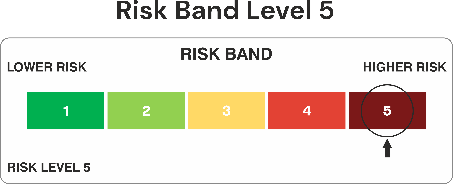
Risk Band
This product is suitable for investors who are seeking | Risk-band | Benchmark Risk-band Nifty 500 Total Return Index (TRI) |
|  | |
Markets will continue to move—up, down, and sideways. But strategies don’t have to stay static.
An Equity Long Short approach is built on a simple idea: Don’t wait for the market, adapt to it.
FAQs: Equity Long Short Fund
1. What is an equity long short fund?
An equity long short fund is a strategy that invests in stocks expected to rise (long) and takes positions in stocks expected to fall (short), aiming to generate opportunities across market conditions.
2. How does a long short strategy work?
It combines long positions in strong companies and short positions in weaker ones, aiming to benefit from both market upside and downside movements.
3. Is an equity long short fund risky?
Yes, it involves relatively higher risk compared to traditional equity funds, especially due to the use of derivatives and active positioning.
4. What is SIF in mutual funds?
SIF (Specialized Investment Fund) is a new category offering more flexible, strategy-driven investment approaches within a regulated framework.
5. How is it different from a regular equity mutual fund?
Unlike traditional equity funds that rely mainly on market growth, equity long short funds aim to generate opportunities across different market conditions using both long and short strategies.
6. What is an equity long-short fund in 2026?
An equity long-short fund is an investment strategy that buys stocks expected to rise (long positions) while taking short positions in stocks or indices expected to fall, using derivatives. This allows the fund to seek returns from both rising and falling prices. Under the SIF framework, these strategies can take short exposure within SEBI-prescribed limits.
7. How does a long-short strategy make money in a falling market?
A fund can take a short position through derivatives when the fund manager expects a stock or index to fall. For example, it can sell a futures contract and later buy it back at a lower price if the market falls, earning the difference. However, if the price rises instead, the short position can result in a loss.
8. What is the difference between a long-short fund and an arbitrage fund*?
The key difference is why the short position is taken. An equity long-short fund can take an unhedged short position based on the fund manager’s view that a stock or index may fall. An arbitrage fund generally buys a security in the cash market and simultaneously sells it in the futures market to capture the price difference between the two. Its futures position is therefore paired with the underlying holding rather than being a directional bet on falling prices.
9. How is an equity long-short fund taxed?
An equity long-short SIF that qualifies as an equity-oriented fund for tax purposes is taxed like an equity mutual fund. Gains on units held for up to 12 months are taxed at 20%. For units held for more than 12 months, long-term capital gains exceeding ₹1.25 lakh in a financial year are taxed at 12.5% without indexation.
10. What is the minimum investment in a long-short SIF?
The SIF framework generally requires a minimum investment of ₹10 lakh per investor at PAN level, calculated across the investment strategies offered under the same SIF. The ₹10 lakh requirement does not apply to accredited investors.
11. How much can a long-short fund short?
Under SEBI’s SIF framework, an investment strategy can have up to 25% unhedged short exposure through permitted derivatives. For example, in a ₹100 crore portfolio, the total unhedged short exposure across stock futures could be up to ₹25 crore, subject to the other applicable exposure limits.
Disclaimer
Investments in Specialized Investment Fund involves relatively higher risk including potential loss of capital, liquidity risk and market volatility. Please read all investment strategy related documents carefully before making the investment decision.
*Mutual Fund Investments are subject to market risks, please read all scheme related documents carefully.
Author Bio

Akshay Kumar Rao

What are Short-Duration Mutual Funds? Features, Advantages, Returns, and Market Cycle
Written by Ashish Suryakant Pawar
13 Apr 2026 • 7 minutes read

Get closer to your financial goals
Start InvestingLoading Form...
Loading Similar Blogs...